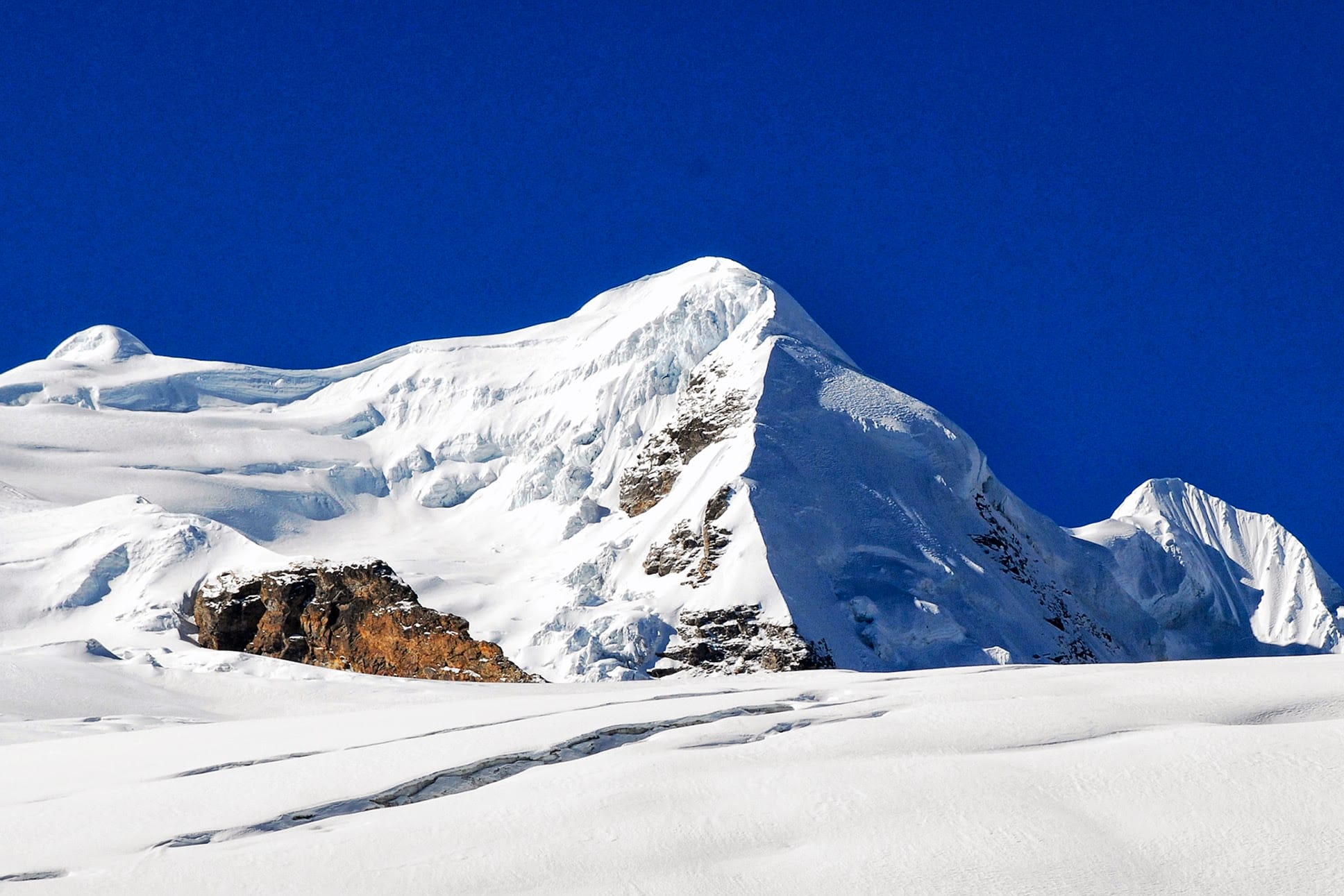
Mera Peak Climbing
Nepal’s highest trekking peak at 6,476m — a genuine glacier summit with five eight-thousanders on the horizon, reachable without prior climbing experience.
Trip Overview
- Best season
- Spring · Autumn
- Group size
- 2 – 8 People
- Start & end
- Kathmandu
Highlights
- Mera Peak Summit – 6,476 m Climb one of Nepal’s best-known trekking peaks and enjoy a vast Himalayan panorama, subject to weather, snow conditions and the team’s fitness.
- Remote Hinku Valley Explore quiet trails, forested hills and remote settlements before entering the high alpine landscape beneath Mera Peak.
- Mera High Camp Spend a night at high altitude in a remote camp before the demanding summit attempt.
- Views of the World's Highest Mountains On a clear day, see Everest, Lhotse, Makalu, Cho Oyu and Kanchenjunga from the summit.
- From Forests to Glaciers Experience changing landscapes, from rhododendron and pine forests to rocky valleys, glaciers and snow-covered slopes.
- A Guided Climbing Expedition Follow a planned approach, acclimatisation and climbing programme adapted to the group’s experience and mountain conditions.
About this trek
Mera Peak Climbing is a high-altitude mountaineering adventure in the remote Hinku Valley of eastern Nepal. Rising to 6,476 m, Mera Peak offers an opportunity to experience Himalayan climbing, from walking through forested valleys and remote mountain settlements to crossing glaciers and standing above the clouds on a high Himalayan summit.
The journey begins with a drive to Phaply and further towards Kharikhola, followed by a trek into the Hinku Valley. The trail passes through forests, small mountain settlements and increasingly rugged alpine terrain before reaching Kothe, Thangnak and Khare. As the altitude increases, the landscape changes from green hillsides to rocky valleys, glacial moraines and snow-covered slopes.
Khare is the main staging point for the climb. Here, climbers spend time acclimatising and practising essential mountaineering skills, including the use of crampons, an ice axe, a climbing harness and ropes. The expedition then continues towards Mera High Camp, from where the team makes an early-morning summit attempt.
The climb follows a glaciated route, and its principal challenges are the extreme altitude, cold temperatures, physical endurance and changing mountain conditions. Previous mountaineering experience is beneficial, and climbers must be prepared to use appropriate equipment and follow the instructions of their climbing guide.
From the summit, on a clear day, the surrounding Himalayan panorama includes some of the world's highest mountains, such as Everest, Lhotse, Makalu, Cho Oyu and Kanchenjunga. Reaching the summit is the main objective, but the journey through the quieter Hinku Valley and the preparation required for high-altitude climbing are equally important parts of the experience.
Join Junkiri Treks for a carefully planned Mera Peak expedition, combining remote Himalayan trekking, acclimatisation and guided mountaineering.
Day by Day Itinerary
Welcome to Kathmandu, Nepal's capital and the gateway to the country's trekking and mountaineering destinations. After completing the immigration formalities at Tribhuvan International Airport, transfer to your hotel.
Meet your guide and the rest of the group for an orientation session covering the itinerary, climbing arrangements and preparations for the journey ahead. Depending on your arrival time, you may also enjoy a meal at a local restaurant and sample Nepali cuisine.
After an early breakfast, begin the drive from Kathmandu to Phaplu in the Solukhumbu region. The road winds through Nepal's mid-hills, following river valleys and passing small towns, terraced fields and scattered mountain settlements.
The landscape changes gradually as the journey moves from the lower hills towards the cooler mountain environment of Solukhumbu. On clear days, there may be views of the surrounding Himalayan peaks along the way.
Driving to Phaplu provides an alternative to beginning the expedition with a flight to Lukla, reducing dependence on the weather-sensitive Lukla flight at the start of the trip. However, the road journey is long, and road conditions can affect the travel time.
If you have additional time and prefer to fly to Lukla, an alternative itinerary can be arranged, subject to flight availability and the time required to reach the Hinku Valley.Take a local jeep from Phaplu towards Khari Khola. The road passes through remote Sherpa and Rai villages, descending towards the Dudh Koshi River before climbing through terraced fields and mountain settlements on the opposite side.
After reaching Khari Khola, begin trekking towards Panggom. The trail gradually climbs through the surrounding hills, offering an introduction to the quieter trekking routes of the Hinku Valley.
The combination of road travel and walking makes this a varied day, connecting the road-accessible lower Solukhumbu with the trails leading towards Mera Peak.
Leave Panggom and climb towards a small pass at around 3,200 m, with views of Numbur Himal on a clear day. The trail then descends along a ridgeline towards Sibuje before continuing through the forested hills.
The route rises and falls as it crosses small streams and follows the contours of the mountain slopes. The final ascent towards Ramailo Danda becomes steeper, eventually reaching a ridgeline with open views of the surrounding mountains.
Descend along a zigzagging forest trail towards the Tama Khola. After crossing the river, continue along a route that repeatedly rises and falls through lush woodland, crossing several small streams along the way.
The landscape remains relatively secluded, with forested slopes and the sound of running water accompanying much of the walk. Chhetra Khola provides a quiet overnight stop beside the stream, away from the busier trekking routes.Continue along the forested trail beside the Hinku River towards Tik Tok village. Beyond the village, the trail becomes wider and follows the river upstream as you gradually gain altitude.
The route passes through a remote valley where forested slopes and rugged hillsides begin to give way to a more alpine landscape. Kothe is one of the principal settlements along this section of the Mera Peak approach and provides a place to rest before continuing higher into the valley.Follow the Hinku River upstream, with occasional views of the surrounding peaks. As the trail gains height, the forest gradually gives way to alpine meadows and increasingly rugged mountain terrain.
Further along the valley, the route crosses rocky ground and glacial deposits before reaching Thangnak. This small mountain settlement lies near a large moraine associated with Sabai Tso, also known as Sabai Lake.
The altitude gain is significant today, so walk slowly and allow time to adjust to the thinner air.We spend the day acclimatising to the altitude. After breakfast, if you feel well enough, you can take an optional hike to Thangnak Ri (4,700 m) before returning to Thangnak. Spend the rest of the day relaxing, reading or sharing riddles with fellow trekkers and guides. Use the time to rest and prepare for the following day.
Leave Thangnak and continue across the rocky moraine terrain towards Sabai Tso (Lake). The route then turns towards the eastern side of the valley, following the landscape beneath Mera Glacier before climbing towards Khare.
The surroundings become increasingly barren as vegetation becomes sparse and the mountains dominate the landscape. Khare is the main staging point for the Mera Peak climb and the last settlement on this route.
The ascent to over 5,000 m is demanding. Maintain a steady pace and inform your guide immediately if you experience symptoms such as a headache, nausea, dizziness or unusual fatigue.
Spend the day acclimatising and preparing for the climb. Your guide will lead a practical session on the use of essential mountaineering equipment, including crampons, an ice axe, a climbing harness and rope procedures appropriate to the route.
You may practise on nearby slopes, following the guide's instructions and learning how to move safely on snow and icy terrain. The session also provides an opportunity to check your personal equipment and clarify the plan for the ascent towards Mera La and High Camp.Take the remainder of the day to rest, hydrate and prepare for the higher camps. Acclimatisation and proper preparation are essential before moving further up the mountain.
Prepare your climbing equipment and continue towards Mera High Camp. The route follows the southern flank of Mera Peak, ascending through high-altitude terrain towards the camp positioned on the mountain.
The air is thin at this elevation, and even straightforward movement can require considerable effort. Follow your guide's pace, take regular breaks and keep yourself adequately hydrated.
After reaching High Camp, check your equipment, prepare warm clothing for the summit attempt and attend the guide's briefing. The team will review the expected weather, route conditions, departure time and safety procedures for the following day.
Begin the summit attempt around midnight, or at the time recommended by your climbing guide. An early start provides an opportunity to reach the summit before winds strengthen or conditions deteriorate.
Follow the climbing route towards the upper slopes, moving steadily across snow and glacier terrain with the appropriate mountaineering equipment. Although much of the ascent may appear gradual, the extreme altitude makes every step physically demanding. The final section may require a fixed rope, depending on snow conditions and the route selected by the climbing team.
On reaching the summit of Mera Peak, take in the panoramic Himalayan views, which on a clear day may include Everest, Lhotse, Makalu, Cho Oyu and Kanchenjunga.After spending a short time at the summit, begin the descent. Descending safely is just as important as reaching the top, so follow the guide's instructions and conserve energy throughout the return to Khare.
This day is reserved for flexibility in the climbing schedule. If poor weather or other unsuitable conditions prevent a summit attempt on Day 12, the guide may use this day for another attempt if conditions improve and the group's health and acclimatisation permit.
If the summit has already been completed, use the day in Kathmandu to explore.The contingency day improves flexibility but does not guarantee a summit opportunity. Additional delays may require further changes to the itinerary.
Begin the return journey by descending through the Hinku Valley towards Kothe. Retrace the route through the rocky upper valley and past the terrain around Thangnak, continuing downhill rather than making a separate overnight stop there.
The descent allows you to lose altitude more quickly, although the long walking day still requires care on uneven ground. As you move lower, the air becomes denser and the surroundings gradually change from barren alpine terrain to greener slopes.Continue along the return trail towards Chhetra Khola. From there, turn towards the northern side of the valley and follow the route through alpine terrain.
The trail climbs towards Thuli Kharka, gaining altitude once again as it approaches the route over Zatrwa La. The ascent can feel demanding after the summit climb, so maintain a measured pace and allow sufficient time for rest.
On arrival, settle into your accommodation and prepare for the final trekking day towards Lukla.Start early for the ascent towards Zatrwa La, the high pass separating the Hinku Valley approach from the Lukla side of the route. The climb can be demanding, and snow, ice or poor visibility may affect the crossing.
After reaching the pass, descend towards Lukla. This is a long day involving a substantial ascent and descent, so take care on steep or slippery sections and follow the guide's instructions.
Once in Lukla, enjoy a well-earned rest and reflect on the journey through the Hinku Valley and your climbing experience.Take the return flight from Lukla to Kathmandu, subject to weather and flight operations. Upon arrival, transfer to your hotel and enjoy time to relax after the expedition.
You may explore Kathmandu's cultural sites, visit local markets, arrange a massage or shop for gifts and souvenirs, depending on your schedule.
Mountain flights can be delayed or cancelled, so keep your plans flexible.
Your Mera Peak Climbing expedition comes to an end. At the appropriate time, our representative will transfer you to Tribhuvan International Airport for your onward flight.
If you have a few hours before departure, you may visit nearby markets or purchase gifts for family and friends, provided you have enough time to return to the airport comfortably.
If you would like to extend your stay in Nepal, Junkiri Treks can help arrange cultural sightseeing or another travel experience.
Route & Elevation
Trip Map
19 stops · 14 places · 474–6,461 m
Kathmandu
1400m
Phaplu
2400mDrive
Khari Khola
1920mDrive
Panggom
2892m
Ramailo Danda
3204m
Chhetra Khola
3132m
Kothe
3580m
Thangnak
4358m
ThangnakNight 2
4358m
Khare
5045m
KhareNight 2
5045m
Mera High Camp
5780m
Mera PeakHigh
6461m
- Return
KhareReturn
5045m
KotheReturn
3580m
Thuli Kharka
4200m
Lukla
2860m
Manthali
474mFlight
KathmanduReturn
1400mDrive
Elevation
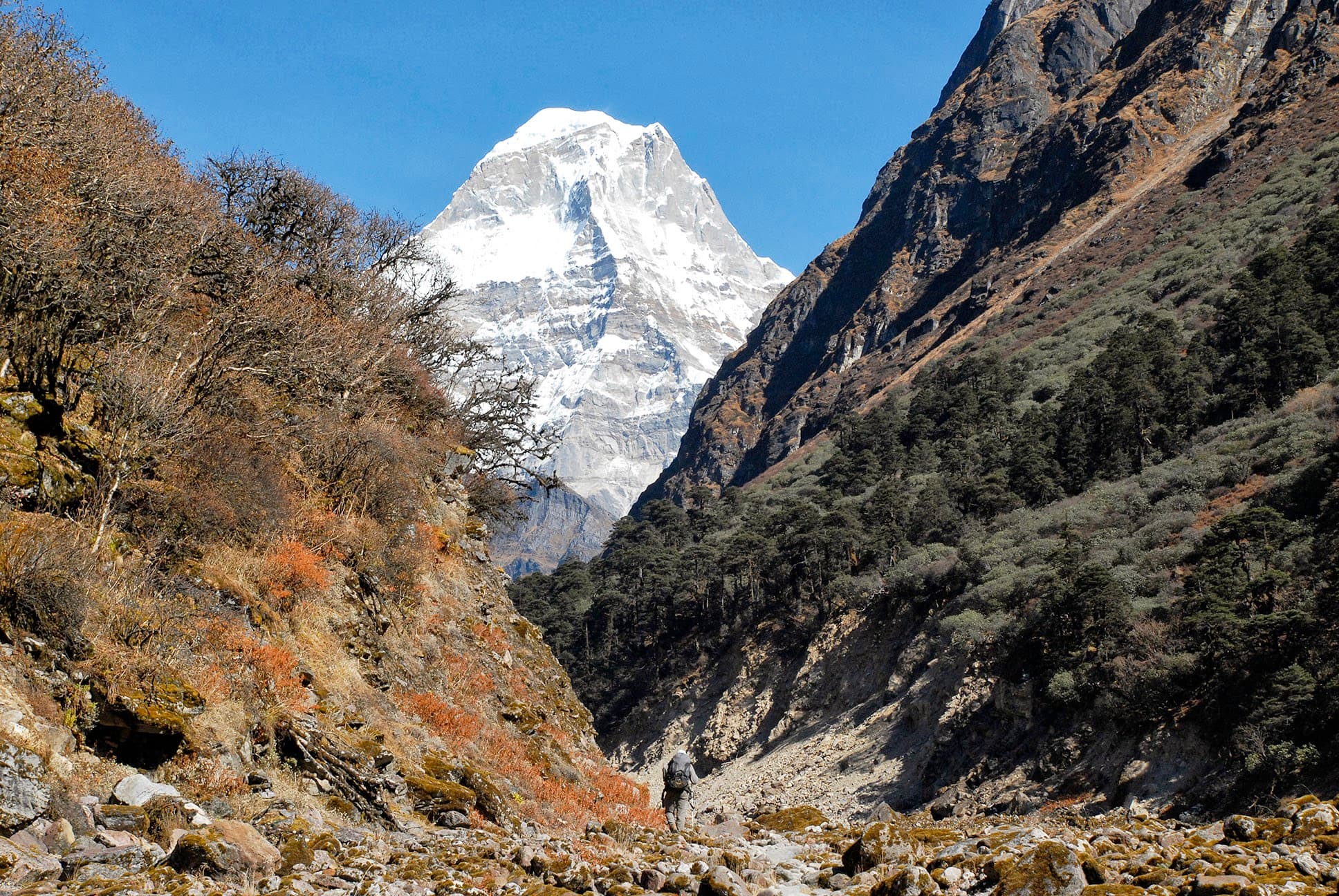
Photographs
What's Included
Included
- Transfers as per itinerary
- Internal Flight
- Meals During Summit Push
- Trekking Guide and porters Climbing Guide
- Climbing equipment: ropes, ice axes and helmet
- National Park Fees Climbing Permits
- Insurance for Staffs
- Accommodation Tent During Summit Push
Not included
- International flights
- Nepal visa
- Travel insurance (must cover altitude and duration)
- Personal climbing gear
- Tips
- Meals
- Personal Expenses
- Extra Expenses Due to Flight Cancellations and Weather
Good to Know
Permits, insurance, altitude and the rest of the small print.
Our standard Mera Peak expedition begins with a drive to Khare and continues towards the Hinku Valley. Depending on the itinerary, the approach passes through Chhutang, Thuli Kharka, Kothe, Thangnak and Khare.
Khare serves as the principal preparation point for the climb. After acclimatisation and technical training, the team moves towards Mera High Camp and makes a summit attempt on Mera Peak. The return route generally retraces the approach through Khare and Kothe before crossing Zatrwa La towards Lukla.
The exact route may vary according to the chosen approach, trail conditions and the expedition's operational arrangements. A longer approach through the southern Hinku Valley is also possible but requires additional days.
The expedition normally begins with a flight from Kathmandu or, when operational arrangements require it, Ramechhap to Lukla. From Lukla, the team starts trekking towards the Hinku Valley.
Flights to Lukla are weather-dependent and may be delayed or cancelled. During some periods, flights may operate from Ramechhap instead of Kathmandu, requiring an additional road transfer. The departure airport and transfer arrangements should be confirmed before travel.
Allow sufficient buffer time before your international departure. A flight cancellation or other delay can affect the return schedule, and an additional night in Kathmandu or another location may be necessary.Most international visitors require a valid Nepal tourist visa. Eligible travellers may obtain a visa on arrival at Tribhuvan International Airport, subject to current immigration regulations.
Check the latest visa requirements, fees and eligibility before travelling. Carry your passport and the necessary travel documents throughout the expedition.
Mera Peak requires the applicable peak-climbing permit, along with the required conservation-area or national park entry documentation for the selected route.
Permit requirements and fees can vary according to the climbing season, applicable regulations and route. Junkiri Treks will confirm the current requirements and arrange the necessary permits as specified in the package.
Spring (April–May):
Spring is a popular period for Mera Peak climbing. Longer daylight hours and generally favourable climbing windows can support summit attempts, although snow conditions, wind and temperatures remain important considerations. Early spring can bring snow and cold temperatures, so late spring is recommended for those with flexible travel dates.Autumn (October–November): Autumn often offers clear mountain views and relatively dry trekking conditions. Cold temperatures and strong winds can still affect the upper mountain, particularly at high camp and near the summit.
Monsoon (June–September): Rain, cloud, flight disruptions and variable trail conditions make this a less favourable period for a standard expedition. Conditions at high altitude must be assessed carefully.
Winter (December–March): Severe cold, snow and wind can make the climb considerably more demanding. Winter departures require specialist assessment, suitable equipment and an experienced climbing team.
Mountain weather is unpredictable in every season. The summit attempt will proceed only when the climbing guide considers conditions suitable.
Mera Peak is a strenuous to very strenuous high-altitude climbing expedition. Although the standard route does not generally involve sustained technical rock or ice climbing, it requires glacier travel, suitable mountaineering equipment and the ability to function safely at extreme altitude.
The summit reaches 6,476 m, where oxygen availability is substantially lower than at sea level. Climbers face long walking days, cold conditions, steep snow slopes and the physical demands of moving in mountaineering boots and crampons.
Previous multi-day trekking experience at altitude is strongly recommended. Experience with crampons, an ice axe and rope procedures is beneficial. Climbers without previous mountaineering experience must be willing to complete the required training and follow their guide's instructions.
Preparation should include regular cardiovascular exercise, uphill walking, strength training and consecutive days of hiking. Good fitness helps, but it does not eliminate the risks associated with altitude.
Acclimatisation is an essential part of the expedition. The route gains altitude gradually through the Hinku Valley, with additional time planned at Thangnak and Khare before the climb towards high camp.
The acclimatisation schedule should not be shortened simply to save time. Climbers must monitor how they feel, maintain a steady pace and report symptoms such as headache, nausea, dizziness, unusual fatigue or loss of coordination to the guide.
Do not continue ascending when symptoms suggest altitude illness. Severe breathlessness at rest, confusion, difficulty walking straight or other serious symptoms require urgent assessment and descent when safe.
No itinerary can guarantee that altitude illness will be avoided. The guide may delay the climb, change the plan or arrange descent if a climber's condition requires it.
Accommodation during the trekking section is generally in local teahouses or lodges, with facilities becoming simpler and more limited at higher elevations.
The high-altitude climbing section requires camping, particularly at Mera High Camp. Suitable tents, sleeping arrangements, food supplies and climbing equipment will be organised by Junkiri Treks.
Hot showers, charging facilities, electricity and internet access may be limited or unavailable at higher elevations. A warm sleeping bag suitable for the expected temperatures is essential for the camping section.
Meals during the trekking section are generally available at local lodges. Common options include dal bhat, noodles, rice, potatoes, soups, vegetables and other locally available dishes.
At higher elevations, food variety becomes more limited. During the camping section, meals are prepared by the expedition's support team according to the planned menu and available supplies.
Drink regularly and use boiled or reliably treated water. Carry reusable water bottles and any water-purification supplies recommended by your guide. Do not rely on bottled water throughout the route.
Conditions can change rapidly in the mountains. Strong winds, snowfall, low visibility and extreme cold may affect the approach to high camp or prevent a summit attempt.
The summit day is particularly sensitive to weather and snow conditions. The climbing guide may delay departure, change the route or abandon the summit attempt if conditions become unsafe.
Reaching the summit is never guaranteed, and safety must take priority over the planned schedule.
Travel insurance must explicitly cover mountaineering or peak climbing to at least 6,476 m, as well as emergency helicopter evacuation where available. Standard trekking insurance may not cover a climbing expedition of this altitude.
Rescue operations can be delayed or unavailable in poor weather. Medical facilities are limited in the remote Hinku Valley, so prevention, communication and a clear emergency plan are essential.
Carry personal medication, disclose relevant medical concerns to your guide before the climb and follow all safety instructions. The climbing team should check equipment and assess the group's condition before moving onto glaciated terrain.
- Begin walking around 7–8 AM on trekking days, depending on the route, weather and day's objective.
- Take regular short breaks and maintain a steady pace.
- Stop for lunch at a suitable lodge, settlement or resting point.
- Reach the overnight lodge or campsite with enough time to rest and prepare for the following day.
- Attend the guide's evening briefing to review the route, weather and next day's arrangements.
- On acclimatisation days, undertake only the activity recommended by the guide.
- On summit day, start well before dawn according to the weather, route and climbing team's assessment. - Summit day is significantly longer and more demanding than a normal trekking day. It requires an early start, sustained movement at altitude and a careful descent.
What to Pack
Down jackets and sleeping bags can be hired in Kathmandu — your guide runs a gear check the evening before you set off.
- Hardshell Jacket With Hood
- Hardshell Pants
- Insulated Down Jacket With Hood
- Insulated Synthetic Pants
- Mid Layer-Top
- Merino Base Layers-2
- Rain Jacket/Soft Shell
- Rain Pant/Soft Shell
- Trekking Trouser
- Trekking T-Shirt (Merino)-2
- Buff
- Summit Socks: 6 Pairs
- Liner Socks: 3 Pairs
- Hiking Boot-Must Be Worn In
- Sleeper/Slider
- Lightweight Liner Gloves: 2 Pairs
- Soft Shell Gloves: 1 Pair
- Expedition Mitts
- Sunhat
- Warm Hat
- Desert cap (optional)
- Sunglasses 100% UVA/UVB protection (UV400).
- Desert Cap
- Sleeping Bag: -40 (High Camps)
- Sleeping Bag: -20 (BaseCamp)
- Sleeping Pad (recommended)
- Sleeping Bag Liner
- Inflatable Pillow
- Daypack 30–35 L
- Duffel or kit bag 60–75 L, carried by the porter
- Rain cover— for both bags
- Passport
- Travel insurance certificate
- Sunscreen: Spf 50 Or Above
- Lip Balm With SunBlock
- Moisturizer
- Razors
- Wet Tissue
- Nai Cutter
- Hand Sanitizer
- Toilet Paper
- Towel
- Garbage Bag
- Toothbrush & Paste
- Female Higiene
- Pee Bottle (Optional)
- biodegradable travel soap
- Personal medication and basic first-aid supplies
- Headlamp
- Power bank
- Charging cables and a universal adapter — Nepal uses type C, D and M
- Mountaineering boots compatible with the selected crampons
- Alpine Ice Axe
- Crampons: 12 Points
- Ascender: 1
- Harness With adjustable leg loops
- Rappel Device: Atc Or Figure 8
- Carabiners: 3 Locking And 3 Regular
- Summit Down Suit 7000m
- Climbing Helmet
- Insulated mountaineering gloves and spare gloves
- Warm summit clothing and face protection
- UV400 glacier sunglasses (100% UVA/UVB protection)
- Trekking Poles
- Reusable water bottles (2 ltr) or CamelBak.
- Portable Solar Charger
- Running shoes/sneakers
- Down Bootie
- Hand/toe warmers
- Blister plasters
- Hiking shorts
- Playing cards
- Book
- Maps
- Notebook and pen
- Warm scarf
- Fleece pants
- Laundry clips
- Flask
- Lightweight binoculars
- Notebook or e-reader
- Repair tape and a small sewing kit
Common Questions
Driving to Phaplu provides an alternative to beginning the expedition with a flight to Lukla, reducing dependence on the weather-sensitive Lukla flight at the start of the trip. However, the road journey is long, and road conditions can affect the travel time.
If you have additional time and prefer to fly to Lukla, an alternative itinerary can be arranged, subject to flight availability and the time required to reach the Hinku Valley.
Mera Peak is a strenuous high-altitude climbing expedition. The standard route is not generally considered highly technical, but the altitude, glacier travel, cold conditions and long summit day make it physically demanding. Previous trekking experience at altitude is strongly recommended.
Mera Peak reaches 6,476 m above sea level. It is widely known as one of Nepal's highest trekking peaks.
Previous mountaineering experience is beneficial but may not be essential for every climber on the standard route. You must have good fitness, understand the demands of high altitude and complete the required technical training before attempting the climb. The guide will assess whether the conditions and your preparation are suitable.
Allow approximately 18 days for this proposed itinerary, including arrival, preparation, trekking, acclimatisation, climbing and return travel. The actual duration depends on the approach route, flight arrangements, weather and the need for additional acclimatisation or contingency days.
April and May are popular spring choices, while October and November are common autumn choices. Conditions vary from year to year, and the final summit attempt depends on suitable weather, snow and wind conditions.
Mera Peak can be an option for fit trekkers entering mountaineering, provided they have suitable preparation, appropriate equipment and professional climbing support. It should not be treated as an ordinary trek or an easy first mountain simply because the standard route has limited technical climbing.
Yes. The summit is above 6,400 m, where altitude-related illness is a serious concern. Acclimatisation, a gradual ascent, symptom monitoring and the willingness to descend are essential.
Training is generally conducted around Khare before the team moves to high camp. It may cover crampon walking, ice-axe use, harness fitting, rope procedures and movement on snow and glacier terrain. The exact training programme depends on the group's experience and the climbing guide's assessment.
If weather conditions prevent us from reaching the summit on the planned day, we will use the allocated contingency day to make another attempt, provided conditions are safe.
If the weather remains unsuitable on the contingency day, we will abandon the summit attempt and descend for safety. For private trips or solo travellers with flexible schedules, an additional summit attempt may be possible by extending the itinerary at an extra cost, payable by the client. Any extension will depend on weather conditions, the climbing team's assessment and the availability of guides and support staff.
Local teahouses or lodges are generally used during the trekking section, while camping is required and provided for the high-altitude climbing section. Facilities become increasingly basic as the route gains altitude.
Flights may be delayed or cancelled because of weather or operational conditions. The team will coordinate revised arrangements where possible. Additional accommodation, transport or flight costs may apply according to the package terms. Keep a buffer before your international departure.
Your policy must explicitly cover mountaineering or peak climbing to at least 6,476 m and emergency helicopter evacuation where available. Check exclusions and altitude limits carefully before travelling.
Yes. We recommend bringing personal items you are comfortable using, such as your climbing harness, helmet and sleeping mat, if you prefer your own equipment.
Yes. Most climbing equipment can be rented in Kathmandu or Khare at an additional cost. Renting in Khare can save you from carrying the equipment throughout the lower part of the trek. However, we recommend bringing your own climbing boots or renting them in Kathmandu, where you will have a better chance of finding the right fit.
Yes. Depending on your available time, fitness and climbing experience, Mera Peak can be combined with Island Peak (6,189 m). However, the combination requires additional days and involves crossing the challenging Amphu Labtsa Pass (5,845 m).
Ready when you are
So ready to start?
Tell us when you'd like to go and we'll shape the route, the pace and the team around you.
