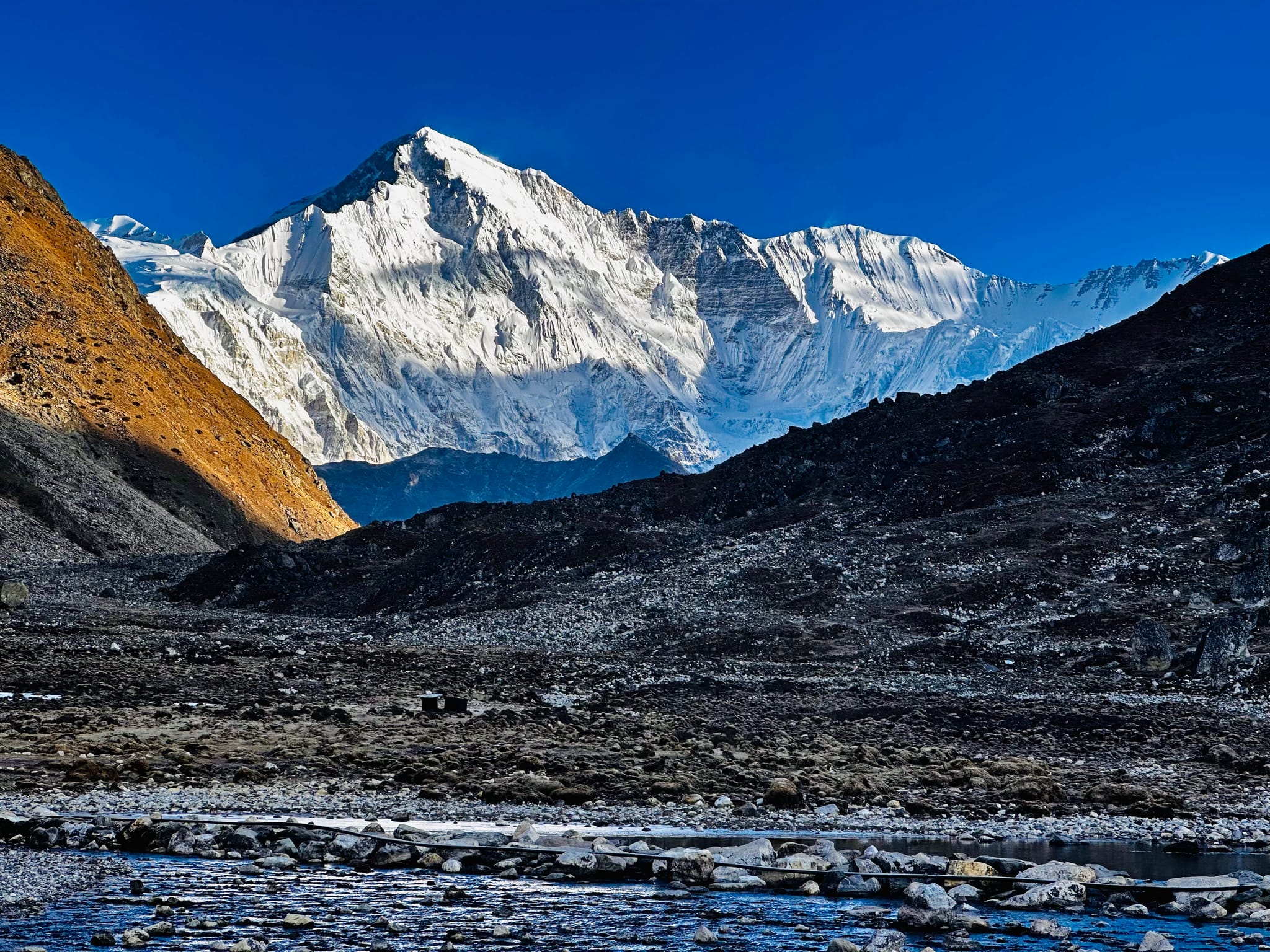
Gokyo Lakes and Everest Base Camp Trek
The full Khumbu traverse — turquoise glacial lakes at Gokyo, the Cho La ice pass, Everest Base Camp and sunrise from Kala Patthar, all in one circuit.
Trip Overview
- Best season
- Spring · Autumn
- Group size
- 2 – 12 People
- Start & end
- Kathmandu
Highlights
- Turquoise Gokyo Lakes
- Cross Cho La Pass (5,420m)
- Summit Gokyo Ri for panoramic views
- Visit Everest Base Camp
- Less crowded than standard EBC route
About this trek
Combine the stunning turquoise Gokyo Lakes with Everest Base Camp on this epic dual-destination trek. Cross the challenging Cho La Pass (5,420m) and climb Gokyo Ri for arguably the best panoramic view in the Khumbu region. This is the ultimate Everest region experience.
Day by Day Itinerary
Arrive in Kathmandu, complete the visa formalities and meet our representative for the transfer to your hotel. Your guide joins you in the evening for the trip briefing and welcome dinner.
A day in the valley to see the temples, stupas and bazaars, and to sort out any remaining equipment in Thamel. Your guide goes through the route in detail, including the Cho La crossing. If Lukla flights are operating from Ramechhap rather than Kathmandu, we drive there this evening instead.
The 20-minute flight to Lukla at 2,840m is one of the great mountain approaches in the world. Meet the porters at the airstrip, then follow an easy trail down the Dudh Koshi valley through Ghat to Phakding — a short day on purpose, to start the acclimatisation gently.
Cross and re-cross the Dudh Koshi on suspension bridges, enter Sagarmatha National Park at Monjo, then face the long steep climb from the Hillary Bridge to Namche. Your first glimpse of Everest comes about halfway up. Namche is the Sherpa capital — bakeries, gear shops and all.
Climb high and sleep low. Walk up to the Everest View Hotel and on to the villages of Khumjung and Khunde, with Everest, Lhotse, Nuptse and Ama Dablam in view, then drop back to Namche for the night. Visit the Sherpa museum and the national park visitor centre in the afternoon.
Here the route splits from the main Base Camp trail and turns north-west into the Gokyo valley — immediately quieter. Climb through Mong La with its chorten and wide views, descend to the Dudh Koshi at Phortse Thanga, then up through rhododendron and birch to Dole.
A short stage climbing above the tree line onto open hillside, with Cho Oyu and Kantega appearing ahead and Ama Dablam behind. Machhermo has a Himalayan Rescue Association post; the afternoon altitude talk there is worth attending.
Follow the valley past Pangka and climb beside the terminal moraine of the Ngozumpa glacier, the largest in Nepal. The trail passes the first two Gokyo lakes before reaching the lodges at the third, where the water is an improbable turquoise against bare rock and ice.
An early climb up Gokyo Ri at 5,357m for what many consider the finest viewpoint in the Khumbu: Everest, Lhotse, Makalu and Cho Oyu — four of the six highest mountains on earth — above the whole chain of lakes. In the afternoon, walk out along the glacier to the fourth and fifth lakes if you have the legs for it.
A short but serious morning crossing the rubble and ice of the Ngozumpa glacier to the small settlement of Dragnag on the far side. The rest of the day is rest, by design: tomorrow is the Cho La.
The crux of the trek. Start before dawn and climb steep scree and a short glacier section to the Cho La at 5,420m, roped and crampon-assisted if conditions require. The descent on the far side is loose and rocky, easing into the high valley at Dzongla with Cholatse and Ama Dablam alongside. A long, demanding day.
A gentler recovery stage traversing high pasture and moraine, with Cholatse reflected in small tarns, to rejoin the main Base Camp trail at Lobuche. Short enough to spend the afternoon resting at altitude.
Climb beside the Khumbu glacier to Gorakshep at 5,180m, then continue out across the moraine to Everest Base Camp at 5,364m, standing beneath the Khumbu Icefall at the foot of the mountain. Return to Gorakshep for the night — the highest you will sleep on the trek.
Leave in the dark for Kala Patthar at 5,545m, the high point of the whole trip and the one place on the route where Everest stands clear and entire above you at sunrise. Then a long, welcome descent into thicker air, past Lobuche and down to Pheriche.
A long descending day back through Pangboche and Tengboche, where the monastery is worth the stop, then down to the river and up the last climb to Namche. Everything feels easier at this altitude, and the bakeries are open.
Retrace the Dudh Koshi valley through Monjo and Phakding to Lukla, crossing the suspension bridges one last time. Say goodbye to the porter team over dinner — the walking is done.
The morning flight back to Kathmandu, weather permitting, and transfer to your hotel. The rest of the day is free for a long shower and the city.
A built-in spare day. Lukla flights are frequently delayed by cloud and this buffer is what stops a delay from costing you an international connection. If everything ran to schedule, spend it on Patan, Boudhanath or Bhaktapur, and join us for a farewell dinner.
The standard itinerary ends here. We arrange your airport transfer, or help with onward plans if you are staying in Nepal.
Route & Elevation
Trip Map
19 stops · 16 places · 1,400–5,545 m
Kathmandu
1400m
Lukla
2840mDrive
Phakding
2620m
Namche Bazaar
3440m
Dole
4110m
Machhermo
4470m
Gokyo
4790m
Gokyo Ri
5357m
Dragnag
4700m
Cho La
5420m
Dzongla
4830m
Lobuche
4940m
Gorakshep
5180m
Everest Base Camp
5364m
Kala PattharHigh
5545m
- Return
Pheriche
4240m
Namche BazaarReturn
3440m
LuklaReturn
2840m
KathmanduReturn
1400mDrive
Elevation
What's Included
Included
- Airport transfers
- Lukla flights
- All meals
- Guide and porters
- All permits
- Tea house accommodation
Not included
- International flights
- Nepal visa
- Travel insurance
- Personal gear
- Tips
Good to Know
Permits, insurance, altitude and the rest of the small print.
Every permit your route needs — TIMS card, national park and conservation area fees — is arranged by us and already in the trip price. Bring four passport photos.
Most nationalities get a visa at Kathmandu airport. Carry USD in cash for the fee and a passport valid for six months beyond your return date.
Required, without exception. Your policy must cover trekking to the maximum altitude on your itinerary and include helicopter evacuation.
Twin-share teahouse lodges on the trail, three-star hotels in Kathmandu and Pokhara. Single rooms are available in the cities on request.
Breakfast, lunch and dinner on trek, chosen from the lodge menu. Bring purification tablets or a filter bottle — buying bottled water on the trail is expensive and leaves plastic behind.
Layered clothing, a broken-in pair of boots and a four-season sleeping bag. Down jackets and bags can be hired in Kathmandu, and we send a full checklist once you book.
Itineraries build in acclimatisation days and your guide carries a pulse oximeter. Ascend slowly, drink more than you think you need, and tell your guide about any headache early.
Draw rupees in Kathmandu — ATMs thin out fast above the trailhead. Most lodges sell wifi and charging by the hour; a local SIM covers the lower valleys.
Common Questions
It is the most serious day of the trek and the main reason this route is graded harder than standard Everest Base Camp. You cross at 5,420m over steep scree and a short glacier section, where crampons and a rope are sometimes used, and the descent is loose and rocky. No prior mountaineering experience is needed, but you must be steady on rough ground and properly acclimatised.
You get everything the standard trek offers — Base Camp, Kala Patthar, Namche, the Khumbu glacier — plus the Gokyo lakes and Gokyo Ri, which many trekkers rate as the better viewpoint, and the Cho La crossing. The Gokyo valley is also far quieter than the main trail. The cost is three or four extra days and a significantly harder route.
Yes. If fresh snow or ice makes the pass unsafe, the route reverses down the Gokyo valley and rejoins the Base Camp trail at Namche. Your guide makes that call on the ground, and it adds a day or two rather than ending the trek.
It is common, especially in the afternoons and during the monsoon shoulder. The itinerary has a spare day in Kathmandu at the end precisely for this. For longer delays a helicopter transfer can usually be arranged at extra cost, which is one good reason to check that your travel insurance covers it.
A Sagarmatha National Park entry permit and a Khumbu Pasang Lhamu rural municipality permit, both arranged by us. Bring a passport copy and passport-sized photographs.
You should be comfortable walking 5–7 hours a day on uneven ground, several days in a row. You do not need climbing experience or a gym routine — the people who struggle are usually those who underestimate the daily hours, not those who are unfit. Two or three months of regular hill walking with a daypack is the best preparation.
Ready when you are
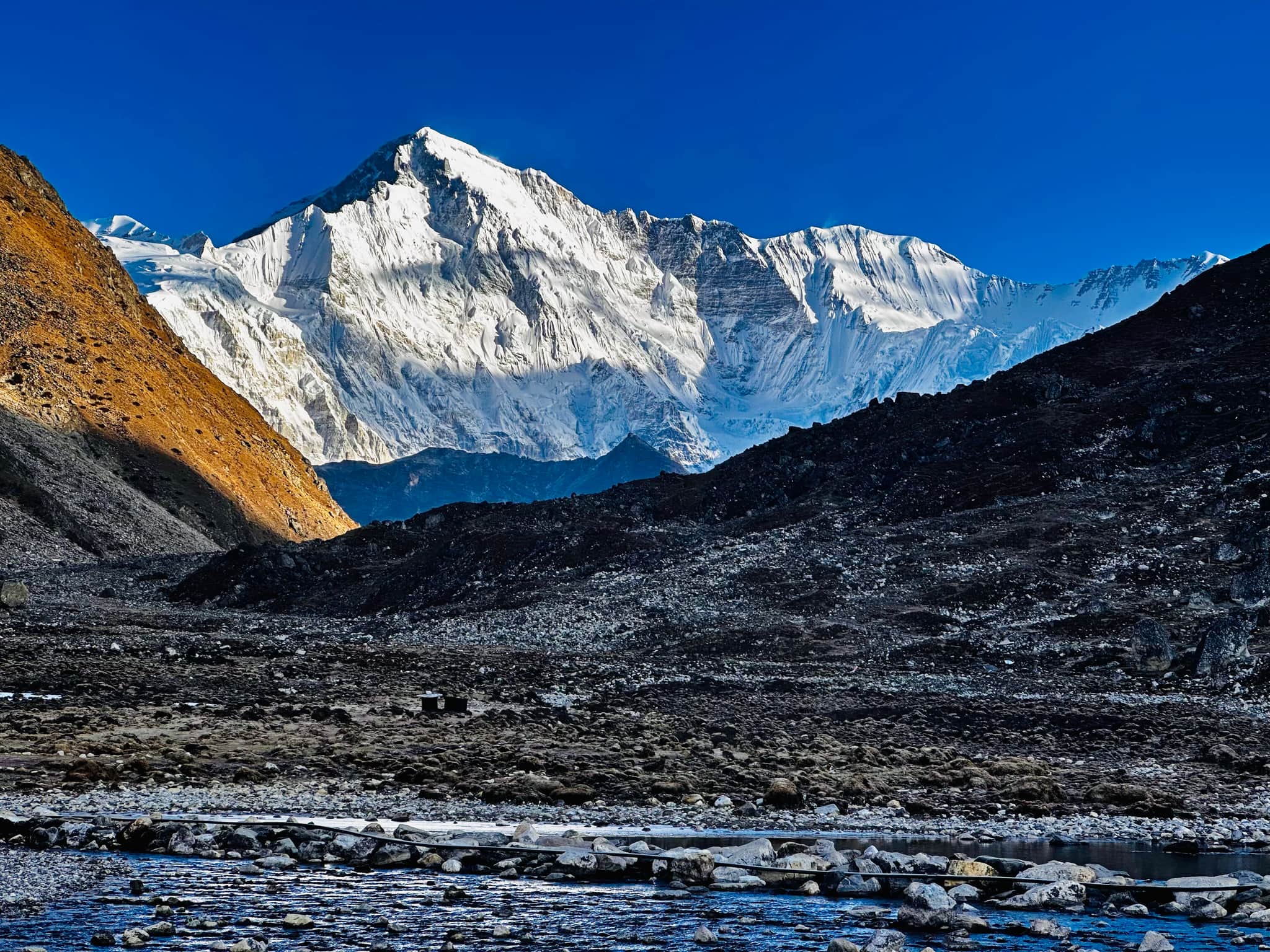
Walk into Everest
Tell us when you'd like to go and we'll shape the route, the pace and the team around you.
